Compact Electric Bike Pumps for UK Cyclists: When Are They Worth Carrying?
Decide when a compact electric bike pump is worth carrying on UK rides, when it can stay at home, and what to pack with it.
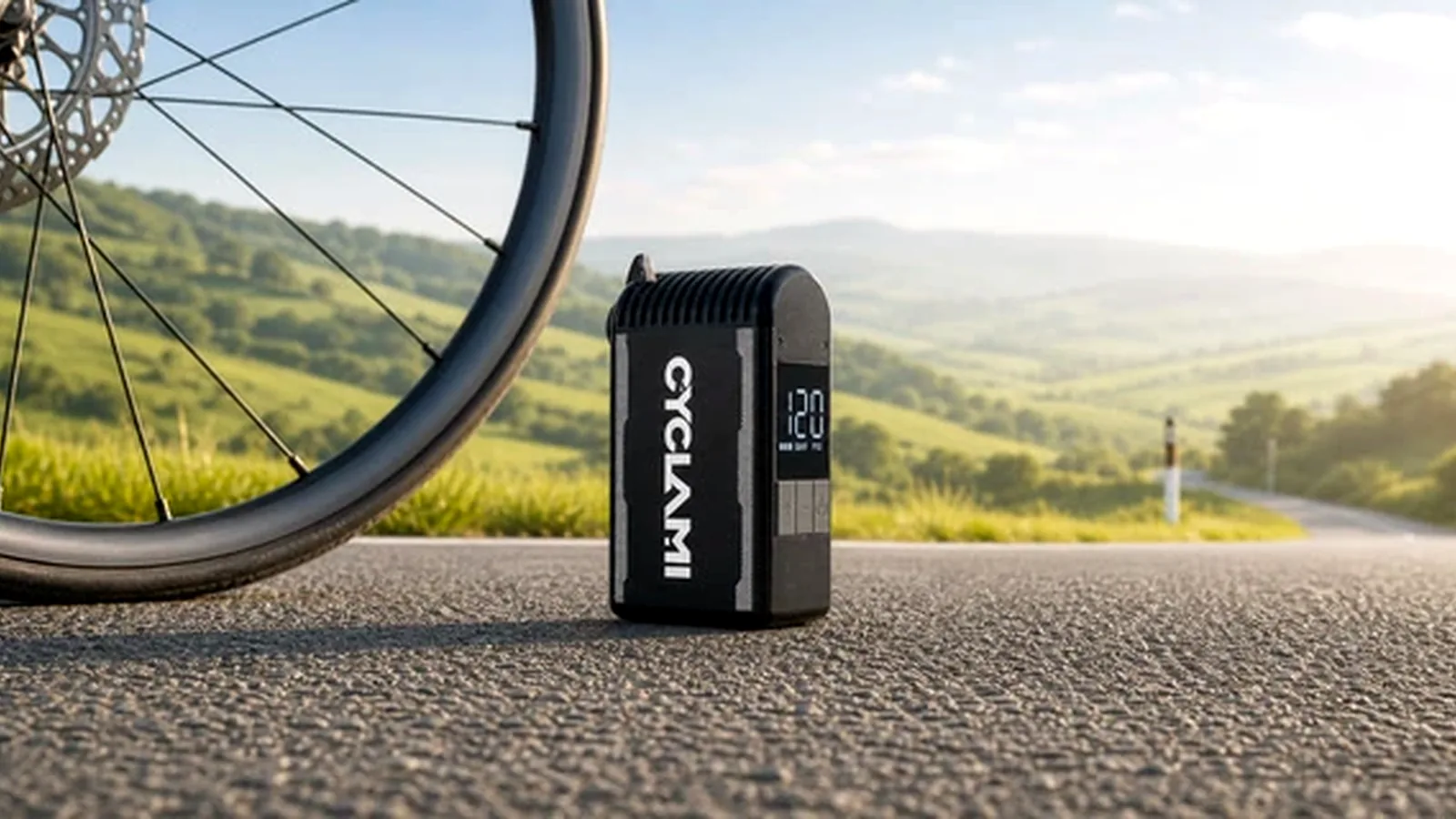
For UK cyclists, tyre pressure is not just a small maintenance detail. It affects comfort, grip, rolling speed and how reliable the bike feels on wet roads, rough lanes and daily commutes. A compact electric pump can make those checks easier. It is still extra weight, extra bulk and another battery to keep ready, so the useful question is not “should every rider own one?” It is “when does this one earn a place on this ride?”
This is a decision guide, not a buying guide. If you are still comparing pressure range, heat behaviour and valve fit, start with the UK electric bike-pump buying guide. If you already have a mini electric pump and only need to choose a pocket or bag, use the carry comparison.
What “worth carrying” actually means
A pump is worth carrying when it is more likely to get you home than the alternatives you already have, and when you will still use it if the ride stays uneventful. A device that stays at 20% charge in a drawer, or travels without the correct valve adapter, is not a plan. It is unused weight.
For most UK riders the alternatives are a floor pump at home, a small hand pump, a CO2 cartridge or a short walk to a shop. The compact electric pump wins when you need controlled pressure away from home and you can keep the battery, hose and adapter together.
When a compact electric pump earns its place
Carry it when at least two of these are true for the ride in front of you.
- You will be away from a floor pump for several hours. Commutes, all-day road loops and gravel lanes make a pre-set, auto-stop top-up more useful than waiting until you get home.
- A puncture or slow leak is a realistic event, not a rare story. Thorned lanes, winter grit and glass on urban cycle paths all raise that chance. A mini electric pump can return a repaired tyre to a rideable pressure if it is charged and the valve fit is correct. It is not a substitute for a tube, levers and a way to find the leak. See what to expect from a flat-to-rideable inflate.
- You need a known target pressure, not a guessed handful of strokes. Road, gravel and hybrid tyres change feel quickly in the wet. A readable gauge and a stop at the pressure you chose is the main reason to carry an electric pump instead of CO2 alone.
- Cold mornings are part of the week. Air pressure drops when the bike sits outside or in an unheated shed. A compact pump is useful for a last check before you leave, then for a second check once the tyres have cooled on the road. The cold-weather pressure guide explains why the first reading indoors can mislead.
- More than one bike or valve type is in play. A household with a road bike, a hybrid and a child’s bike may need both Presta and Schrader. That only works if the correct adapter or pump-head setting travels with the pump. Identify the valve first with the Presta or Schrader guide.
When you can leave it at home
Leave the electric pump behind when the ride is short, close to help, and you already have a simpler inflation method that you have practised.
- A 20-minute local loop that starts and ends next to a floor pump.
- An indoor trainer session or a closed-circuit session where a track pump is already in the bag.
- A race or group ride where you have chosen a hand pump or CO2 as the official roadside method and you do not want a second hard object in the jersey.
- Any day the pump is below a reliable charge, the hose is missing, or you have not confirmed the valve adapter. An unready electric pump is worse than a small hand pump you know how to use.
A compact electric pump also stays at home for jobs it is not designed to do. Mini pumps rarely seat an MTB tubeless bead, and a 120 PSI rating does not make one a workshop compressor. Those limits are covered in the tubeless-bead note and the car and motorcycle top-up guide.
A quick carry-or-leave table
| Ride situation | Carry the electric pump? | What still has to travel with it |
|---|---|---|
| Weekday commute with mixed paths and little workshop access | Usually yes, if it is charged the night before | Correct valve adapter, hose if the pump uses one, spare tube or repair kit |
| All-day road, gravel or bikepacking loop | Yes, as part of a kit rather than as the only inflator | Hand-pump or CO2 backup, food space considered, dry pouch in wet weather |
| Short after-work loop from a house with a floor pump | Optional. A hand pump may be enough | Whatever you already practise using at the roadside |
| Pre-ride top-up in a hallway, shed or garage | Keep it at the door, not necessarily on the bike | The pressure you actually want, not the sidewall maximum |
| Winter morning when the bike has sat outside | Yes for a check before leaving, then a recheck outside | Time to let the reading settle in the air you will ride in |
Pack it as a small system, not a lone gadget
The pump body is only one part of the kit. A carry decision should include the hose, the valve adapter, a way to keep the charging port dry and a fallback if the battery or thermal cut-out stops the motor. Our notes on keeping a hand pump as backup and on heat and extension-hose use are the practical companions to this article.
Do not treat a silicone sleeve as waterproofing. No IP rating is being claimed here. If the forecast is wet, use a sealed pouch and keep grit out of the valve and charging port.
Charge on a habit, not on hope. A saddle-bag pump that has sat for a fortnight may look ready and still fail at the first puncture. The pre-ride charge checklist is the habit that makes carrying worthwhile.
How this applies to the CYCLAMI A2S
The CYCLAMI A2S is a manufacturer-specified 120 PSI mini electric pump. CYCLAMI lists the pump body at 73.6 × 45 × 28.6 mm and 136 g, which is the useful size and weight when you are judging a jersey pocket or a small saddle bag. The retail box is larger and heavier; do not use the packaged figures for on-bike carry.
Those dimensions make the A2S easy to take on a commute or weekend loop. They do not, by themselves, make it the right object for every ride. It is worth carrying when you have confirmed the valve interface in the current manual, packed the hose or adapter you will actually use, and charged it before you leave. It is a compact example, not a claim that one connector fits every valve unchanged. See the CYCLAMI A2S product page for the supplied configuration, and test the connection at home first.
Frequently asked questions
Is a compact electric pump worth carrying on every ride?
No. Carry it when you will be away from a floor pump, you can keep it charged, and you have the correct valve adapter. Leave it behind on short local loops if a practised hand pump already covers the same job.
Does carrying one mean I can skip a hand pump?
Not if the ride is remote or winter-long. Battery charge, heat protection and a missing adapter can stop an electric pump. A small hand pump remains the simplest fallback.
Should I carry it in a jersey or under the saddle?
Choose the place that keeps the pump, hose and adapter together, lets the pump cool before you pack it away, and does not bounce loose. The jersey-pocket versus saddle-bag guide compares those two options.
Can I use it only at home and still get the benefit?
Yes. Many commuters get most of the value from a hallway or shed top-up before they leave. That use does not require the pump to travel on the bike. The morning top-up routine covers that pattern.