Electric Bike Pump vs CO2 Inflator: UK Cost and Reliability Guide
Compare electric bike pumps, CO2 inflators and manual mini pumps using a transparent UK cost model, plus reliability, control, cold-weather and air-travel checks.
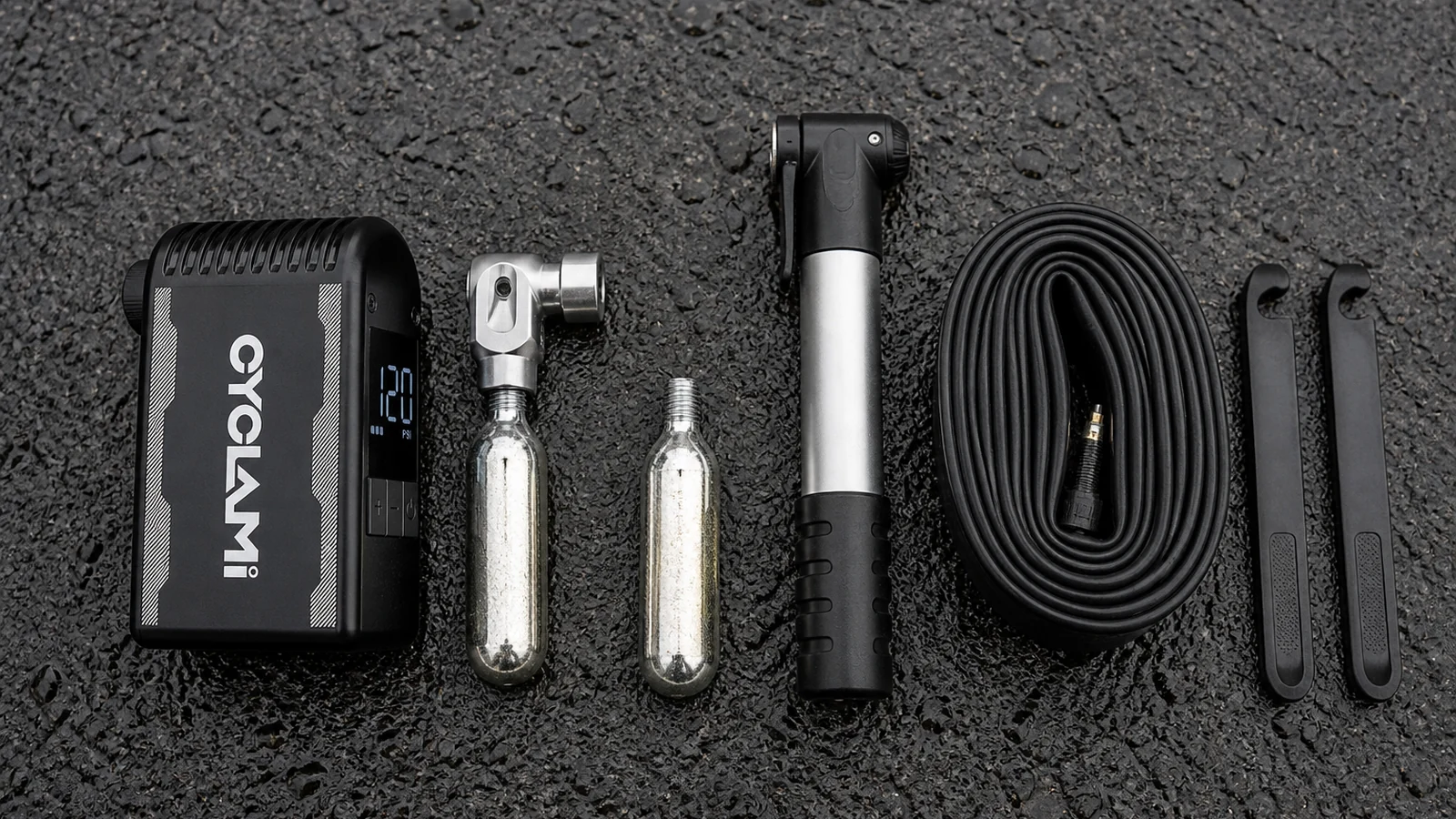
An electric bike pump is usually the more controllable reusable option, a CO2 inflator is the fastest compact option, and a manual mini pump is least dependent on batteries or consumables. None is automatically best. The sensible choice depends on frequency of use, tyre requirements, conditions and the consequences of failure.
The short comparison
| Factor | Reusable electric pump | CO2 inflator | Manual mini pump |
|---|---|---|---|
| Upfront spend | Usually highest | Inflator head plus cartridges | Usually one pump purchase |
| Repeat spend | Charging electricity; eventual wear or battery replacement | A new cartridge whenever one is discharged | Usually low; seals or parts may eventually need attention |
| Inflation speed | Powered and convenient, but model and tyre dependent | Normally the quickest release of gas | Slowest and physically demanding |
| Pressure control | Good when the device provides a gauge and selectable target | Easy to overshoot or underfill without practice and a controllable head | Progressive and easy to stop, but a separate gauge may be needed |
| Cold handling | Battery performance and operating limits matter | Cartridge and inflator become very cold during discharge | Rider effort rises, but no battery or compressed-gas performance dependency |
| Waste | Reusable device; electricity and eventual battery/electronic disposal still count | Spent metal cartridges and packaging | Reusable device with relatively few consumables |
| Main failure modes | Flat charge, damaged cable or valve connection, overheating, electronics | Empty, incompatible or mis-threaded cartridge; seal or inflator-head error | Damaged seal, bent valve, poor technique or simply not enough time and effort |
| Flying | Lithium-battery device rules apply | Gas-cartridge and operator restrictions apply | Simplest of the three, subject to ordinary security and baggage rules |
These are trade-offs, not test results. Inflation time and usable capacity vary with tyre volume, pressures, temperature, valve connection and the tool.
A transparent break-even framework
Instead of relying on a universal “pays for itself after X uses” claim, enter your own prices and habits.
Let:
- E = electric pump purchase price
- e = electricity cost allocated to one puncture inflation
- R = any expected electric-pump repair or replacement reserve over the period
- H = CO2 inflator-head purchase price
- p = delivered price per compatible CO2 cartridge
- k = average cartridges discharged per puncture event, including misfires or a second cartridge when these actually occur
- M = manual mini-pump purchase price
- m = expected seal, hose or other maintenance cost over the period
- N = number of puncture inflation events being compared
The simple ownership-cost equations are:
Electric total = E + (N x e) + R
CO2 total      = H + (N x k x p)
Manual total   = M + m
If k x p is greater than e, the simple electric-versus-CO2 break-even point is:
N = (E + R - H) / ((k x p) - e)
This planning model excludes time, failed repairs, price changes, battery ageing and loss. Add them only when you can assign defensible values.
Worked illustrative example
The cyclami.co.uk product-page snapshot captured for this Release showed £69.85 including VAT on 15 Aug 2026; recheck live price and stock. For an illustrative calculation only, suppose a rider enters:
E = £69.85e = £0.01per eventR = £0within the chosen comparison periodH = £10p = £2per cartridgek = 1.2cartridges discharged per puncture event
The £10 head, £2 cartridge and 1p electricity figures are made-up inputs demonstrating the formula, not current UK prices or measured A2S energy use:
N = (£69.85 - £10) / ((1.2 x £2) - £0.01)
N = £59.85 / £2.39
N = 25.04 puncture events
Under these assumptions, the totals cross after roughly 26 whole events. Replace every input with your delivered costs and actual history. Calculate e from metered charging energy multiplied by your tariff: electricity is not free. A solo rider may never reach 26 events; a club or multi-bike household may reach them quickly. Break-even describes usage, not calendar time.
What the CYCLAMI A2S specification does and does not establish
The CYCLAMI A2S product page is the relevant electric option here. Its manufacturer lists 120 PSI maximum pressure, 2 x 500 mAh batteries, 18 L/min airflow, selectable pressure from 0 to 120 PSI, USB-C charging, 73.6 x 45 x 28.6 mm dimensions, approximately 136 g weight, an aluminium-alloy shell and operating noise below 65 dB.
These are manufacturer specifications, not independent Cyclami UK tests. They do not establish inflations per charge, time for a particular tyre or winter battery performance. Read the current official manual, charge before riding and test the setup at home.
For wider buying considerations, see the portable electric bike pump guide. Riders building a compact repair system can also compare priorities in the bikepacking mini-pump guide.
CO2: very fast, but each attempt matters
A CO2 inflator can fill a compatible tyre rapidly from a tiny package. The cartridge is a finite attempt: a poor connection, damaged seal or premature discharge can consume it before the tyre is usable.
Pressure control depends on the head. A controllable design can meter gas, but tyre size and target pressure determine whether one cartridge is enough. Practise with the exact combination you carry.
Rapid gas expansion chills the cartridge and inflator. Avoid bare-skin contact with the uninsulated cartridge during discharge and use the sleeve or protection specified by its maker. Cold weather can make roadside handling less pleasant. Check pressure after the ride and replace or top up according to the tyre and sealant manufacturers’ guidance.
Recycle spent cartridges according to local guidance. Do not claim either system is environmentally superior without lifecycle evidence covering electronics, batteries, energy, metals, packaging, transport, lifespan and actual use.
Manual mini pumps: slower, but an important fallback
A manual pump has no state of charge or single-use gas supply. It is a strong remote-riding fallback if it fits the valve and reaches the required pressure. Its costs are effort and time; tiny high-pressure pumps can require many strokes, while high-volume models may be awkward at road pressures.
A hose can reduce side load on a Presta valve. Support the valve, avoid forcing the head at an angle and use a dependable gauge. Our guide to road-bike tyre inflation in UK weather explains why the right target depends on rider, tyre, rim, load and conditions.
For remote journeys, an electric or CO2 primary plus a manual backup provides another route home after a flat battery or failed cartridge.
Reliability is a system, not a product label
Before every important ride:
- Confirm the tool matches the fitted Presta or Schrader valve and any removable valve core.
- Check the spare tube, plugs or patches that actually repair the cause of lost pressure.
- Charge the electric pump, inspect its cable and protect it from accidental activation; or count and inspect the cartridges and inflator seal.
- Test the manual pump’s head and hose rather than carrying it untouched for a year.
- Know the tyre’s pressure range, verify pressure and protect every tool from impact.
No inflator repairs a split sidewall or damaged rim. Inflation is only the final step in a puncture plan.
Taking pumps and cartridges on a flight
Do not infer airline permission from a cycling shop description. The UK Civil Aviation Authority’s detailed passenger-baggage guidance says that airlines and security agencies may impose additional restrictions and passengers should contact the airport and airline when unsure.
For Division 2.2 gas cartridges with no subsidiary hazard used for purposes other than a self-inflating personal safety device, the CAA table lists carriage in checked and cabin baggage with operator approval, no more than four cartridges per person, and a maximum water capacity of 50 ml each. It notes that, for CO2, 50 ml water capacity is equivalent to a 28 g cartridge. Classification and acceptance of your particular cycling cartridge still need confirmation from the airline; routes and operators vary.
An electric pump is a battery-powered device, so lithium rules also apply. CAA guidance covers watt-hour limits, protection against damage and activation, and cabin or hold conditions. Check the battery marking and manual, then confirm with the airline. The published 2 x 500 mAh capacity alone does not establish watt-hours because nominal voltage is also required.
A manual pump avoids compressed-gas and lithium-battery questions, although normal airport security, size and baggage rules still apply. For any of the three, check again shortly before travel because carrier policies and regulations can change.
Which setup suits you?
- Frequent rider or multi-bike household: electric can spread its upfront cost across repeated use, but keep it charged.
- Racer prioritising a tiny, fast system: CO2 is compelling if you accept consumable cost and practise deployment.
- Tourer, audax rider or bikepacker: a manual pump is the most self-sufficient foundation; add powered speed if it earns its weight.
- Occasional commuter: buy for dependable recovery, not a theoretical break-even point you may never reach. A straightforward manual pump may be better value.
- Air traveller: decide only after checking both the CAA guidance and the operating airline. A manual pump is generally the least complicated starting point.
The best answer may be a fast primary and an independent fallback. Practise the full repair before facing a dark, cold roadside.
Bottom line
An electric bike pump converts a larger upfront purchase into repeated powered use; CO2 converts a smaller setup into fast but consumable inflations; a manual mini pump exchanges speed for independence from charge and cartridges. Use the formula with your own delivered prices and actual puncture history, then judge whether the apparent saving survives the reliability and travel requirements of your riding.
The CYCLAMI A2S price in this guide comes from the versioned cyclami.co.uk retail-page capture, not from the manufacturer page and not from a permanent offer: £69.85 including VAT observed 15 Aug 2026; recheck live price and stock. Its technical figures are separately attributed to the official manufacturer, and no performance test has been invented here. Whichever system you choose, a correctly repaired tyre, a compatible connection, an appropriate target pressure and a tested backup matter more than winning a spreadsheet comparison.