Best Mini Electric Pump for Bikepacking in the UK: What Actually Matters
Choose a bikepacking electric pump by tyre volume, valve fit, heat, charging and repair redundancy, with practical UK travel and weather checks.
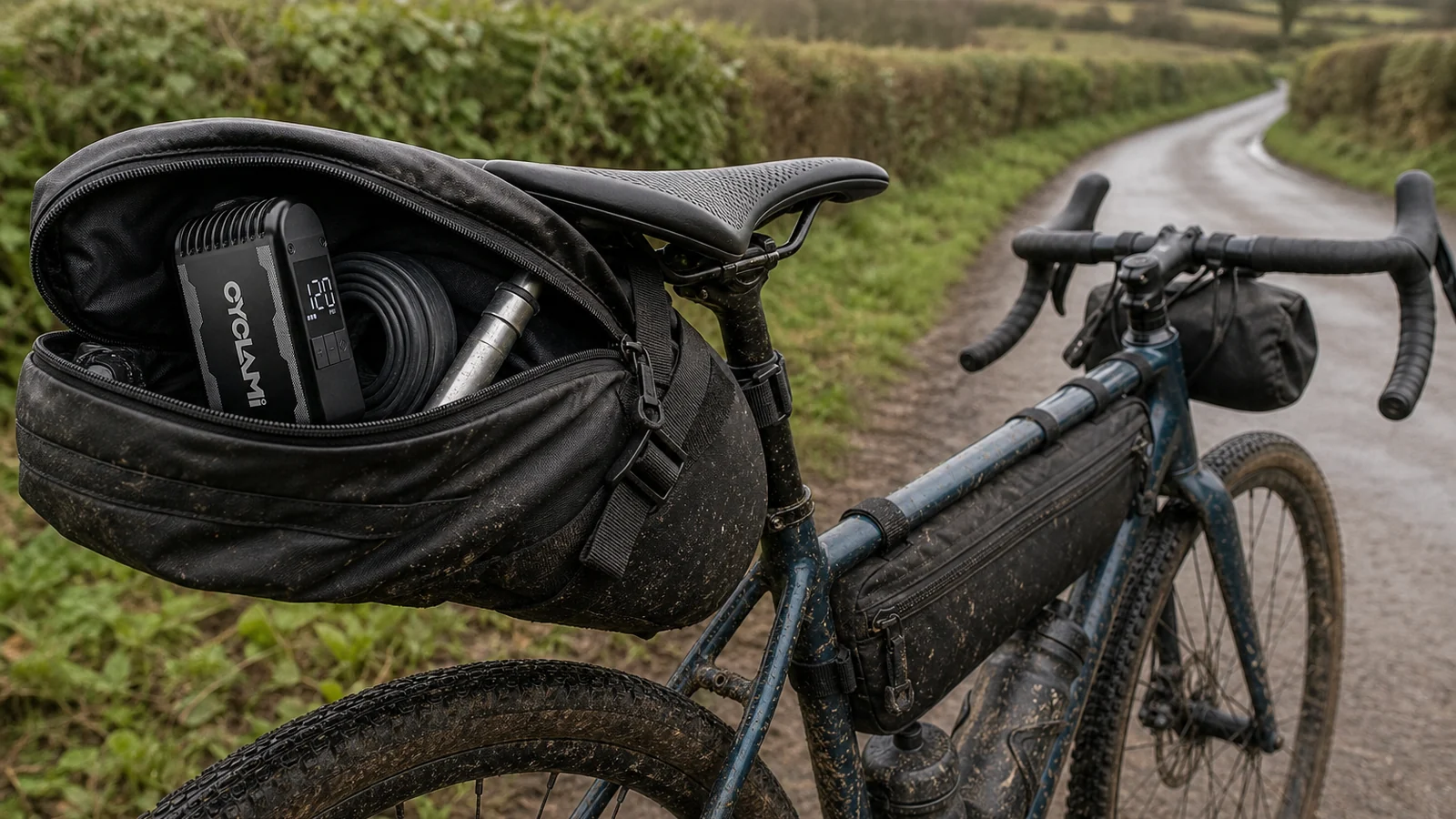
The best electric pump for bikepacking is not simply the lightest device or the one with the highest maximum PSI. It is the pump that completes your known tyre task, fits your valves and luggage, survives the way you carry it and still leaves you with a workable plan if its battery or connector fails.
For a supported day ride, one rechargeable inflator may be a reasonable convenience. For an overnight gravel route, audax or remote tour, it should be one layer in a repair system. Electricity can reduce effort; it cannot replace a tube, seal a sidewall or create power after the final charge is gone.
Define the hardest credible inflation
Start with the failure, not the product listing. Record the tyre size, usual pressure, lowest plausible starting pressure and number of repairs needed between reliable charge points.
A narrow road tyre topped up after a slow leak is a small air-volume job. A wide gravel tyre fitted with a replacement tube at the roadside is much larger. Seating a stubborn tubeless bead can require a rapid air delivery that a pocket inflator may not provide, even if it can eventually reach the stated pressure.
Total system weight matters too, but compare like with like. Count the pump, hose, adapter, charging cable and protective pouch, then add the manual backup and repair materials you still need. A tiny bare-device figure can be misleading if the usable kit requires several separate parts.
Ask for performance evidence using a tyre and pressure range similar to yours. If a listing says “four tyres” without dimensions, start pressure, target pressure and cooling pauses, do not make it the foundation of a remote plan.
A documented compact example
CYCLAMI’s manufacturer page lists the A2S electric pump at about 136 g, 73.6 x 45 x 28.6 mm, up to 120 PSI and 18 L/min airflow, with 2 x 500 mAh battery capacity and USB-C charging. The cyclami.co.uk product page captured on 15 August 2026 additionally displayed 7.4 V and a 45-minute charge time; treat those as dated retail-page fields and recheck them before purchase.
Those specifications help compare dimensions, pressure ceiling and charging logistics. They do not establish how many of your tyres it will inflate. Temperature, remaining pressure, tyre volume, valve seal and cooling all matter. Use the general electric pump guide to check another model by the same standard.
Redundancy beats a single impressive device
Cycling UK includes a pump, correct spare tube, tyre levers, patches and suitable tools in its basic roadside equipment guidance. A practical bikepacking system builds on that:
- electric inflator for measured, low-effort inflation;
- manual mini pump as the battery-free fallback;
- correct tube or tubeless plug system;
- patches and tyre boot for a second failure or casing damage;
- valve tools only if your setup requires them and you know how to use them;
- charging cable kept dry and separate from dirty repair parts.
The manual pump need not be pleasant for routine use. Its job is to turn a dead battery, damaged cable or lost adapter from a trip-ending fault into a slower repair.
Valve and rim access
Identify Presta or Schrader before the trip and test the complete connection with loaded luggage fitted. Deep-section rims may leave little valve stem exposed; crowded spokes can make a rigid pump body awkward; a loose removable Presta core can unwind with an adapter.
An approved extension hose may protect a delicate valve from the weight and vibration of the device. It also adds seals that must be checked. Pack the exact adapter with the pump rather than assuming a village shop will stock it. Our valve identification guide covers the home test.
Heat and repeated use
Compact compressors can heat the outlet, hose and body. Follow the manual’s maximum run and cooling instructions, use the supplied insulation and avoid packing a hot device straight into a waterproof bag. A second tyre inflated immediately after the first can be a different thermal task from two inflations separated by half an hour.
If a route could require several large-volume repairs, either choose a system with evidence for that workload or plan more than one inflation method. Never defeat a thermal warning to finish faster.
Charging between stages
Map reliable charging rather than assuming every cafe or campsite will provide a socket. Keep enough time for the manufacturer’s charge cycle and consider what else shares the same power bank. A phone used for navigation and emergencies may deserve priority.
USB-C describes a connector, not guaranteed compatibility with every charger or charging protocol. Carry the approved cable and follow the manual. Keep ports clean and dry, and do not charge a wet, damaged, swollen or unusually hot device.
Before each stage, confirm the display, units and battery state. On a long trip, a short home test at the expected pressure is more useful than merely seeing a full-battery icon.
Cold, rain and storage
Cold conditions can change measured tyre pressure and affect the way battery equipment performs. Establish tyre pressure consistently and recheck outdoors. If pressure loss is larger than expected or continues, inspect the valve, tube, sealant and casing instead of attributing it to weather. See the cold UK tyre-pressure guide.
Do not infer waterproofing from a pouch or a photo in rain. Unless the exact pump has a documented ingress rating and instructions, protect it from standing water, dry the connector area and separate it from wet clothing. A small labelled bag also prevents the valve adapter from disappearing into the bottom of a frame bag.
Flying with a pump
UK Civil Aviation Authority guidance says baggage rules depend on the item and battery, and passengers should always check with their airline. Portable battery-powered devices must be protected from damage and unintended activation; battery condition and watt-hour information can matter. Airline and airport interpretation remains the operational decision.
Before flying:
- obtain the device’s battery specification and transport guidance;
- check both the CAA guidance and the operating airline’s current rules;
- protect controls and terminals against accidental activation or damage;
- do not travel with a damaged, swollen or overheating battery;
- keep the answer from the airline if the item is unusual.
Do not assume that rules for a rechargeable pump are identical to rules for CO2 cartridges. Gas cartridges have their own limits and operator conditions. The electric versus CO2 guide explains the distinction.
A home rehearsal
Run this test before trusting a pump on a remote route:
- deflate the actual tyre to a realistic post-repair pressure;
- fit the hose or adapter without help;
- inflate to a safe target within tyre and rim limits;
- note heat and any required pause;
- remove the connection without loosening the valve core;
- repeat only within the manufacturer’s duty cycle;
- finish the same job with the manual backup.
This is not a laboratory performance claim. It is a compatibility rehearsal for your equipment.
Decision rule
Choose the smallest electric pump that has credible evidence for your largest expected tyre task, connects cleanly to your wheels and fits a realistic charging schedule. Then carry the repair materials and manual pump that make its failure survivable.
For bikepacking, “best” is not a device acting alone. It is a system that remains useful after rain, cold, a second puncture or an empty battery changes the plan.